How to Spot a Real Tribal Tattoo Specialist in Toronto
Toronto has hundreds of tattoo artists and only a handful who genuinely specialise in tribal. The style looks simple from a distance, which is exactly why it exposes weak technique: a shaky line or thin black has nowhere to hide inside a Polynesian or Maori pattern.
Here is how to tell a real tribal specialist from a generalist who will take the booking anyway.
Look at healed work, not fresh photos
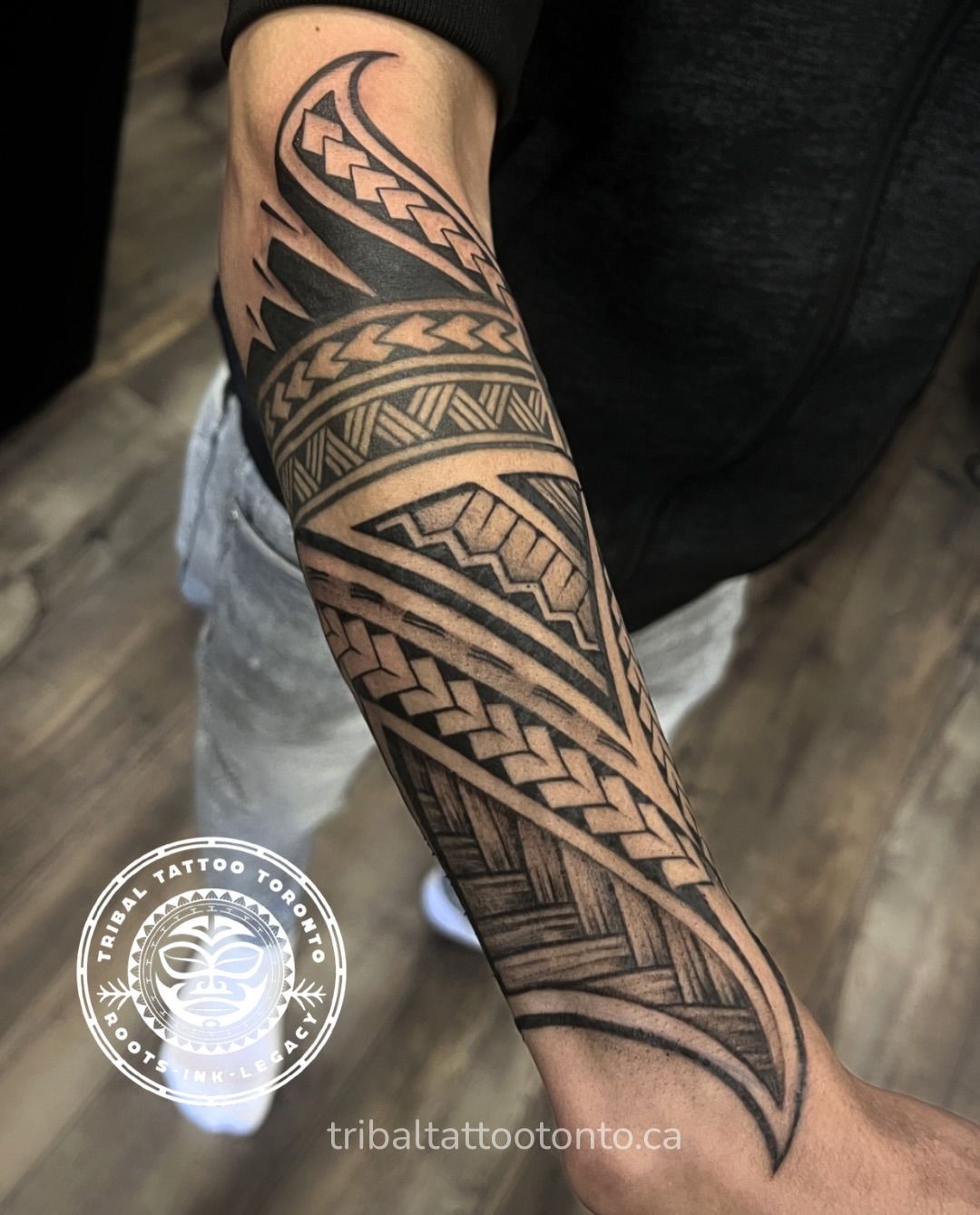
Fresh tattoos always look sharp. Healed photos, ideally a year or more old, tell you whether the black stayed solid and the lines stayed crisp. Ask directly to see healed tribal work: any artist who is proud of their blackwork will have it ready.
Solid black that healed dark rather than grey, sharp edges and fills with no patchy spots are the marks of someone who knows the style. If a portfolio is nothing but fresh work shot under studio lights, you are only seeing tattoos at their best moment, not their normal one.
Ask which tradition the pattern comes from
Tribal is not one style. Polynesian, Maori, Marquesan, Hawaiian, Filipino batok and Borneo work each carry their own grammar of shapes. A specialist can name the tradition a design belongs to and explain what the elements stand for. A generalist calls all of it tribal, pulls a shape off Pinterest and scales it until it fits the gap on your arm.
The answer tells you something about respect as well. Ask what is appropriate for someone outside the culture to wear, and what is not. An artist who has done the reading will give you a straight answer rather than a shrug.
Freehand on the body beats a flat stencil
Tribal is built to move with the body. Panels have to wrap the deltoid, follow the line of the calf and sit square across the chest. That is close to impossible to plan on a flat sheet of paper. Specialists draw straight onto the skin with markers, measure the pattern against your actual shape, then tattoo from that drawing.
If someone quotes you from a screenshot without ever seeing you in person, the design was built for a body that is not yours.
Judge the negative space, not just the black
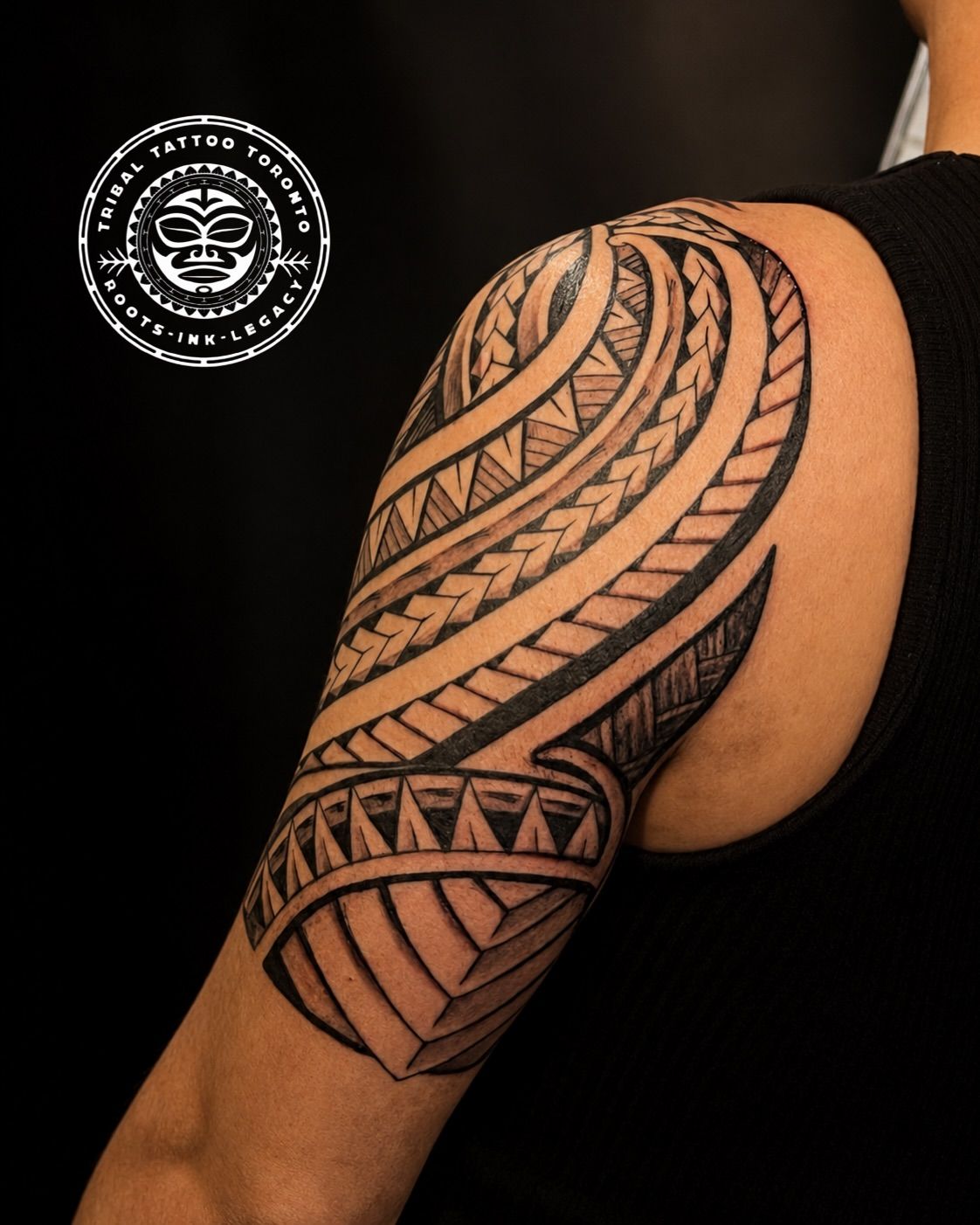
In good tribal the bare skin does as much work as the ink. Spacing has to stay even and the gaps wide enough that the pattern still reads from across a room in fifteen years, once the black has spread a little. Crowded designs with hairline gaps look impressive on day one and turn into a smudge later.
Ask how they plan for ageing
Large blackwork is a long commitment, so the answer should be specific: how many sessions, how the fills are broken up, how much room is left between elements to allow for spread. Ask what happens if a patch needs touching up once it has settled. Vague answers usually mean limited experience at that scale.
Questions worth asking before you book
- Which tradition is this drawn from, and what do the elements mean?
- Can I see healed photos of similar work, at least a year old?
- Do you draw on the body, or work from a flat stencil?
- How many sessions will this take, and how long is each one?
- How do you handle touch-ups on solid black?
Red flags to walk away from
- The same design turning up on several different clients
- A portfolio made up entirely of fresh, day-one photos
- A price quoted over DM from a screenshot, with no consultation
- Reluctance to talk about where a pattern comes from
- A rate far below everyone else in the city for large blackwork
Booking a tribal specialist in Toronto
Tribal Tattoo Toronto works in freehand Polynesian, Maori and Filipino tribal every day, on custom sleeves, chest, back and leg pieces. Bring your references to a consultation and we will talk through the tradition behind them, where the pattern should sit on your body and how many sessions it will realistically take.
If you are still comparing artists, use the questions above. The right answers are specific, and the wrong ones are vague.